A reliable handle meat probe is an important component for accurate meat temperature measurement during cooking, grilling, BBQ, and food preparation. While the probe itself is responsible for contacting the food and detecting temperature, the handle plays an equally important role in usability, safety, and durability.
For manufacturers, food equipment suppliers, BBQ brands, and professional buyers, choosing the right meat probe requires more than simply checking the appearance. Materials, temperature resistance, probe construction, connection design, and cleaning requirements can all affect the overall performance of the product.
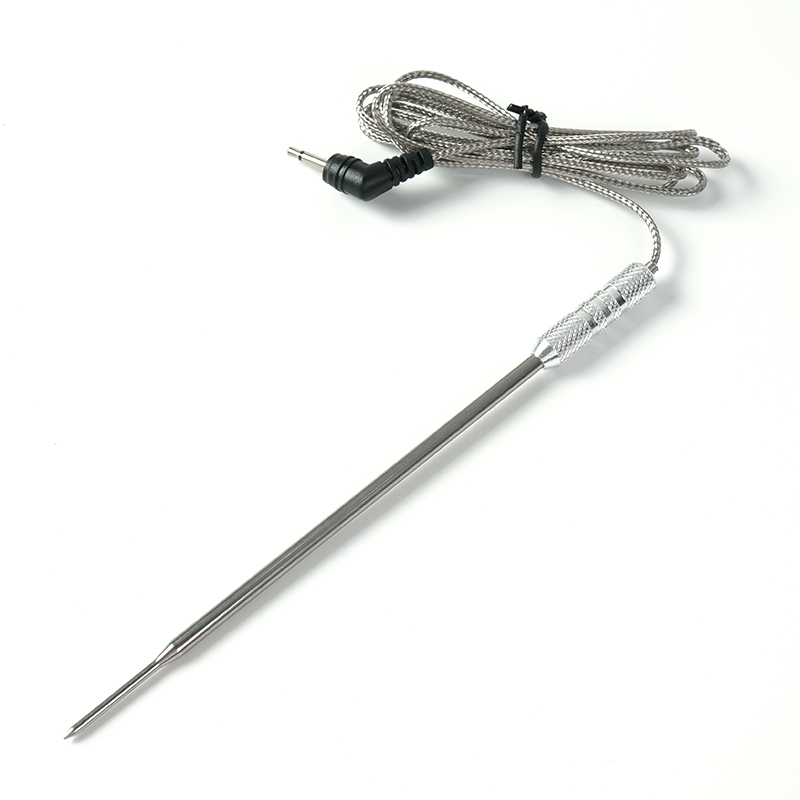
1. Heat-Resistant Handle Material
Heat resistance is one of the first features to consider when selecting a handle Meat Probe. Meat probes are commonly used around grills, ovens, smokers, and other high-temperature cooking environments, so the handle needs to withstand the heat generated during normal operation.
A suitable handle material should provide enough thermal resistance while remaining comfortable to hold. Good insulation can also help reduce heat transfer from the probe shaft to the user's hand during temperature measurement.
For commercial applications, buyers should also consider how the handle material performs after repeated exposure to heat, moisture, and regular cleaning.
2. Durable Probe Construction
The probe shaft is the part that directly enters the food, so its construction has a direct impact on measurement reliability and service life. A quality food temperature probe should be designed for repeated insertion into different types of meat without easily bending or deforming.
Stainless steel is commonly used for food temperature probes because it offers a useful combination of durability, corrosion resistance, and easy cleaning. The connection between the probe and handle should also be securely constructed to withstand repeated use.
3. Suitable Temperature Range
Different cooking applications require different temperature ranges. A meat probe used for BBQ may experience different conditions from one used for an oven or food processing application.
When choosing a handle meat probe, check the operating temperature range of the complete probe assembly. The handle, probe shaft, sensor, and connection should all be suitable for the intended application.
A suitable temperature range allows the probe to provide reliable readings without exposing the components to conditions beyond their designed operating limits.
4. Comfortable and Practical Handle Design
Ergonomics can have a significant effect on the user experience. A meat probe may need to be held for several seconds during each measurement, and professional kitchens or food production environments may require repeated measurements throughout the day.
A practical meat temperature probe should have a handle that is easy to grip and operate. The shape, size, surface texture, and overall weight should be considered together to provide comfortable handling.
A well-designed handle can also make it easier for users to insert and remove the probe accurately while reducing unnecessary movement during measurement.
5. Easy Cleaning and Maintenance
Food-contact equipment needs to be easy to clean. Meat probes can come into contact with raw meat, cooking juices, oils, and other food residues, making cleaning an important consideration.
The probe should have a smooth surface with minimal areas where food particles can accumulate. Materials should also be compatible with the cleaning methods specified by the manufacturer.
For commercial food applications, easy maintenance can help improve operational efficiency and support consistent hygiene practices.
Why These Features Matter for B2B Buyers
For distributors, OEM customers, BBQ equipment manufacturers, and food equipment suppliers, the quality of a handle meat probe can affect the reliability of the finished product. A probe that is frequently exposed to heat and moisture needs durable materials and stable construction.
Buyers should evaluate not only the individual probe but also its compatibility with the intended thermometer, sensor, connector, and cooking equipment.
Handle Meat Probe for Different Applications
A handle meat probe can be used in a variety of temperature measurement applications, including:
BBQ and outdoor grilling
Home and commercial ovens
Food preparation
Smokers and roasting equipment
Commercial kitchens
Food processing and temperature monitoring
The required specifications may vary depending on the application. Probe length, temperature range, handle material, sensor type, and connection method should be selected according to the final equipment design.
How to Choose the Right Handle Meat Probe?
Before selecting a handle meat probe, consider five key areas: heat resistance, probe construction, temperature range, handle ergonomics, and cleaning requirements. These factors can help buyers identify a probe that is suitable for both the intended cooking environment and expected frequency of use.
For OEM and wholesale applications, customization may also be important. Different products may require specific probe lengths, handle designs, sensor configurations, cable lengths, or connection types.
Conclusion
A good handle meat probe should combine reliable temperature measurement with practical handling, heat resistance, durability, and easy maintenance. Looking at these features together can help manufacturers and professional buyers select a probe that meets the requirements of their target application.
Whether used for BBQ, grilling, commercial cooking, or food processing, the right meat temperature probe can provide a practical solution for consistent temperature monitoring.
Frequently Asked Questions
What is a handle meat probe used for?
A handle meat probe is used to measure the internal temperature of meat and other foods during cooking, grilling, roasting, BBQ, and food preparation.
What material is commonly used for a meat probe?
Stainless steel is commonly used for the probe shaft because it offers durability, corrosion resistance, and a smooth surface that is relatively easy to clean.
Why is heat resistance important for a handle meat probe?
Meat probes are often used around high-temperature grills, ovens, and smokers. A heat-resistant handle helps maintain safe and comfortable handling during temperature measurement.
Can a handle meat probe be customized?
Depending on the manufacturer, customization may include probe length, handle design, sensor configuration, cable length, connector, and other specifications for OEM applications.