



When looking for a simple way to reduce heat transfer, aluminum foil is often one of the first materials people think about. It is lightweight, affordable, easy to handle, and has a naturally reflective surface. But does aluminum foil reflect heat effectively, and can it really be used as a form of insulation?
The short answer is yes. Aluminum foil can reflect radiant heat, particularly infrared radiation. However, it does not work in exactly the same way as traditional insulation materials. Its effectiveness depends on the type of heat involved, the surface condition of the foil, and how the foil is installed.
Understanding these differences can help you determine when aluminum foil is useful for thermal protection and when a more complete insulation system is needed.
How Does Aluminum Foil Reflect Heat?
Aluminum is a highly reflective metal. When radiant energy reaches a clean, relatively smooth aluminum surface, a significant portion of that energy can be reflected rather than absorbed.
Heat can move through materials in several ways, but radiant heat behaves differently from heat transferred through direct contact or moving air.
This is why aluminum foil heat reflection is particularly relevant in applications where radiant heat is a major source of thermal transfer.
Instead of absorbing all the incoming radiant energy, the reflective surface sends part of it back toward its source or away from the protected area.
What Types of Heat Can Aluminum Foil Reflect?
To understand the performance of aluminum foil, it helps to distinguish between the three basic methods of heat transfer: radiation, conduction, and convection.
Radiant Heat
Radiant heat travels in the form of electromagnetic radiation, including infrared radiation. Aluminum foil can reflect a substantial portion of this radiant energy because of its reflective metallic surface.
This is the main reason reflective aluminum foil is used in thermal barrier and insulation applications.
Conductive Heat
Conduction occurs when heat moves through direct contact between materials. Aluminum itself is a good conductor of heat, so a thin sheet of aluminum foil should not be considered a strong standalone barrier against conductive heat transfer.
In other words, simply wrapping a hot object in aluminum foil does not automatically provide the same insulating performance as a thick layer of foam or mineral wool.
Convective Heat
Convection occurs when heat is transferred through the movement of liquids or gases, such as warm air.
A sheet of aluminum foil by itself does not provide significant resistance to convection. However, when reflective foil is incorporated into a properly designed insulation system with an air space, it can contribute to overall thermal performance.
Why Does an Air Gap Matter?
One of the most important factors in using reflective foil for thermal control is the presence of an air space.
A reflective surface works differently when it faces an open air gap rather than being pressed directly against another material. The air space provides room for the reflective surface to reduce radiant heat transfer across the gap.
For this reason, reflective insulation products are often designed with foil surfaces combined with other materials or air spaces rather than relying on a single sheet of metal.
This distinction is important when evaluating claims about aluminum foil insulation. The foil provides the reflective component, while the overall system may provide additional resistance to conduction and convection.
Is Aluminum Foil a Good Insulator?
Aluminum foil is better described as a radiant heat reflector than a traditional thermal insulator.
Traditional insulation materials generally work by slowing down heat movement through a relatively thick layer of material. Foam, fiberglass, and mineral wool, for example, can reduce conductive and convective heat transfer.
Aluminum foil works primarily by reflecting radiant energy.
Therefore, the answer depends on what you mean by "insulation." If the goal is to reduce radiant heat, aluminum foil can be highly useful. If the goal is to prevent all forms of heat transfer, foil alone is usually not enough.
What Makes Aluminum Foil Reflective?
The reflective performance of aluminum comes from its metallic surface and optical properties.
A clean, smooth aluminum surface has relatively low emissivity compared with many non-metallic surfaces. Low-emissivity surfaces tend to emit and absorb less thermal radiation, which makes them useful for managing radiant heat.
Surface condition can therefore matter. Oxidation, dirt, coatings, roughness, and other changes to the surface can influence how effectively the material reflects and exchanges radiant energy.
Can Aluminum Foil Reflect Heat From the Sun?
Yes. Aluminum foil can reflect part of the solar radiation that reaches its surface.
This is one reason reflective aluminum materials are used in applications where reducing solar heat gain is important.
However, the performance depends on how the foil is positioned and what happens to the reflected energy. If the foil is installed directly against another surface without an appropriate air space, the overall thermal benefit may be different from a properly designed reflective insulation system.
For buildings, vehicles, packaging, and industrial applications, reflective foil is therefore often combined with other materials to provide more comprehensive thermal protection.
Does Aluminum Foil Keep Things Cold?
Aluminum foil does not generate cold, but it can help reduce certain types of heat transfer.
For example, when used in food packaging, the reflective surface can help manage radiant heat exchange. The foil can also act as a physical barrier against moisture and provide some protection from the surrounding environment.
However, foil alone is not equivalent to a thick layer of thermal insulation. If an item needs to remain cold for a long period, the overall packaging design, insulation thickness, ambient temperature, and air movement are all important.
Does Shiny Aluminum Foil Reflect More Heat Than Dull Foil?
The difference between shiny and dull aluminum surfaces is related to surface finish and emissivity.
A clean, shiny metallic surface generally has stronger reflective characteristics than a heavily oxidized or rough surface. However, the actual thermal performance of a product depends on its construction and application rather than appearance alone.
For commercial insulation products, manufacturers may control the foil surface, thickness, lamination, and other properties to achieve the required performance.
Common Applications of Aluminum Foil for Heat Reflection
Because aluminum is lightweight and reflective, foil-based materials are used in a wide range of applications.
Building Insulation
Aluminum foil insulation can be incorporated into roofing, walls, attics, and other building systems where radiant heat control is required.
Reflective foil can be combined with foam, bubble materials, fiberglass, or other insulation layers to create a more comprehensive thermal barrier.
Roofing Systems
Roof surfaces can receive significant solar radiation. Reflective aluminum materials can help reduce radiant heat absorption when properly incorporated into a roofing or insulation system.
HVAC Applications
Foil-faced insulation materials are commonly used around ducts and HVAC systems. The foil facing can provide a reflective surface while also serving as a protective or vapor-resistant layer depending on the product construction.
Thermal Packaging
Reflective foil is also used in certain packaging systems designed to control temperature during storage and transportation.
Depending on the design, foil may be combined with insulating foam, air bubbles, paper, or other materials to improve thermal performance.
Automotive and Industrial Applications
Vehicles, machinery, ovens, equipment enclosures, and industrial systems may use reflective aluminum materials as part of a thermal barrier where radiant heat needs to be managed.
Can Aluminum Foil Be Used for Heating Applications?
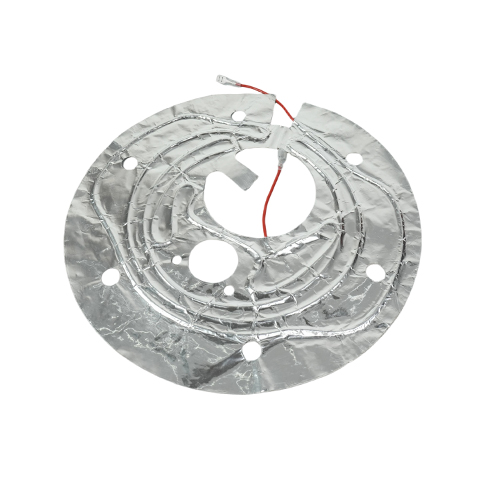
Although aluminum foil is commonly associated with reflecting heat, aluminum foil can also play an important role in specialized heating solutions. In applications where controlled and uniform surface heating is required, an Aluminum Foil Heater can combine the thermal conductivity and flexibility of aluminum foil with an embedded Heating Element.
Unlike ordinary aluminum foil, a foil heater is designed to convert electrical energy into heat. Depending on the product design, heating wires such as nickel-chromium or constantan alloy can be embedded into the foil structure to provide consistent heating across the required surface.
This type of flexible heating solution can be used in applications such as heated cushions and seat pads, pet food warming, HVAC systems, health and wellness equipment, and other products that require controlled and relatively uniform surface heating.
The distinction is important: ordinary aluminum foil primarily reflects radiant heat, while an aluminum foil heater is an engineered heating component designed to generate and distribute heat. The two may use the same basic aluminum material, but their functions and constructions are very different.
What Is Reflective Insulation?
Reflective insulation is a broader category of thermal products that use low-emissivity surfaces to reduce radiant heat transfer.
Aluminum foil is commonly used as the reflective facing because of its reflective properties, low weight, and flexibility.
However, a reflective insulation product is not necessarily just aluminum foil. It may contain multiple layers designed to address different types of heat transfer.
For example, a multilayer system may combine:
Aluminum foil
Foam insulation
Bubble layers
Polyethylene films
Fiberglass or mineral insulation
Reinforcing materials
This combination can provide both radiant heat reflection and resistance to conductive heat transfer.
Aluminum Foil vs. Traditional Insulation
| Feature | Aluminum Foil | Traditional Insulation |
|---|---|---|
| Main function | Reflects radiant heat | Slows heat transfer |
| Radiant heat control | Strong | Varies by material |
| Conductive heat control | Limited when used alone | Generally stronger |
| Weight | Very lightweight | Depends on material |
| Flexibility | High | Depends on material |
The comparison shows why reflective foil and conventional insulation are often used together rather than treated as competing solutions.
How Can You Improve the Thermal Performance of Aluminum Foil?
If aluminum foil is being used as part of a thermal control system, installation can be just as important as the material itself.
Maintain an Appropriate Air Space
Where reflective insulation is intended to reduce radiant heat transfer, an appropriate air space can be important to the system's performance.
Keep the Reflective Surface Clean
Dirt and surface contamination can affect the reflective characteristics of the foil. Keeping the surface reasonably clean can help maintain its intended function.
Combine Foil With Insulation
When both radiant and conductive heat transfer need to be controlled, combining a reflective foil layer with a suitable insulating material can provide a more complete solution.
Consider the Installation Environment
Temperature, humidity, mechanical stress, exposure to chemicals, and other environmental conditions can affect the long-term performance of foil-based materials.
Is Aluminum Foil Suitable for High-Temperature Applications?
Aluminum has useful thermal properties, but the suitability of aluminum foil for a high-temperature application depends on the complete product design.
Factors such as foil thickness, alloy, surface treatment, temperature range, exposure time, mechanical stress, and the materials laminated to the foil should all be considered.
For demanding industrial environments, it is better to select a foil-based thermal barrier according to tested product specifications rather than assuming that any aluminum foil will perform at high temperatures.
FAQ About Aluminum Foil and Heat Reflection
Does aluminum foil reflect heat?
Yes. Aluminum foil can reflect radiant heat because aluminum has a highly reflective, relatively low-emissivity surface. Its effectiveness depends on the surface condition and installation method.
Does aluminum foil block heat?
Aluminum foil primarily reflects radiant heat rather than blocking all forms of heat transfer. It provides limited resistance to conductive and convective heat when used as a thin standalone sheet.
Is aluminum foil a good thermal insulator?
Aluminum foil is better considered a radiant heat reflector than a conventional thermal insulator. For broader thermal protection, it is often combined with materials that provide greater resistance to conduction and convection.
Does aluminum foil reflect heat from the sun?
Yes. A reflective aluminum surface can reflect part of the solar radiation that reaches it. The actual reduction in heat gain depends on installation, surface condition, air gaps, and the overall construction.
Does aluminum foil keep heat in?
It can help reduce radiant heat loss when properly positioned, but foil alone does not provide the same insulation effect as a thick thermal insulation material. Its performance depends heavily on the application and installation.
What is the difference between aluminum foil and reflective insulation?
Aluminum foil is a reflective material, while reflective insulation usually refers to a complete insulation product or system that uses a low-emissivity surface, often aluminum foil, together with other layers or an air space.
Can aluminum foil be used to make a heater?
Ordinary household aluminum foil should not be treated as a heating element. Purpose-designed aluminum foil heaters use an engineered heating wire and insulation structure to generate and distribute heat safely according to their specified operating conditions.
Final Thoughts
So, does aluminum foil reflect heat? Yes. Its main thermal advantage comes from its ability to reflect radiant energy, particularly infrared radiation.
However, aluminum foil should not be viewed as a universal replacement for conventional insulation. A thin foil layer is not designed to provide the same resistance to conductive and convective heat transfer as foam, fiberglass, mineral wool, or other dedicated insulation materials.
For many applications, the most effective approach is to use aluminum foil insulation as part of a multilayer thermal system. By combining a reflective surface with an appropriate air space and insulating materials, it is possible to address multiple methods of heat transfer at the same time.
At the same time, aluminum foil can also be engineered into specialized heating components. This is where products such as aluminum foil heaters provide a different function, using electrical energy to create controlled and uniform heat rather than simply reflecting radiant energy.
Whether the application involves buildings, roofing, HVAC systems, packaging, vehicles, industrial equipment, or flexible heating products, the right material should be selected according to the actual temperature, environment, installation method, and thermal performance requirements.
