



Accurate temperature measurement is essential in modern industries,especially in applications where temperature control directly affects product quality,equipment safety,and production efficiency.Among various temperature sensing solutions,k type thermocouple wire is one of the most commonly used temperature measurement components due to its reliability,wide temperature range,and excellent durability.
But how does a k type thermocouple wire actually work?Understanding its operating principle,structure,and applications can help engineers and manufacturers choose the right temperature sensing solution for their needs.
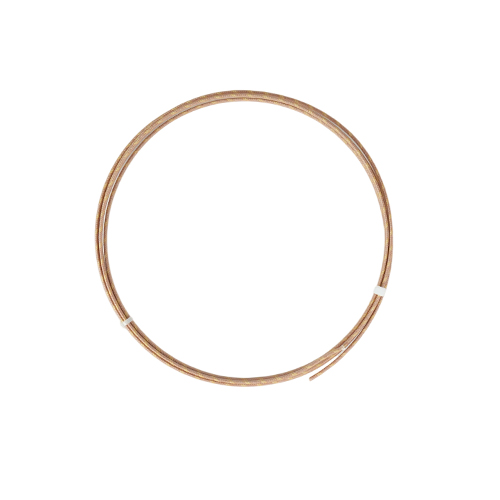
What Is k type thermocouple wire?
A K type thermocouple wire is a temperature sensor wire made from two different metal alloys:Chromel(Nickel-Chromium)and Alumel(Nickel-Aluminum).These two conductors are joined together at one end to form a measuring junction.
When this junction experiences a temperature difference compared with the other end of the wire,a small electrical voltage is generated.This voltage changes according to the temperature variation and can be measured by a temperature controller,meter,or data acquisition system.
This phenomenon is known as the Seebeck effect,which is the basic working principle behind all thermocouple sensors.
The Working Principle of K Type Thermocouple Wire
Although the pressure widget is not central to thermocouple operation,the core concept behind K type thermocouple wire is based on electrical voltage generation rather than pressure.The actual working process can be explained through the following steps:
1.Temperature Creates a Voltage Difference
A K type thermocouple wire contains two different metal wires.When one end is exposed to a higher or lower temperature than the reference end,the electrons in the two metals move differently.
This difference in electron movement creates a small voltage signal called thermoelectric voltage.
2.The Voltage Signal Represents Temperature
The generated voltage is extremely small,usually measured in millivolts(mV).A temperature measurement device detects this signal and converts it into a readable temperature value.
The relationship between voltage and temperature is known through calibration tables,allowing the system to accurately determine the measured temperature.
3.The Reference Junction Compensates Temperature Changes
A thermocouple system requires a reference point,also called the cold junction.Modern temperature controllers usually use electronic compensation technology to adjust for changes at this reference point.
This ensures that the fin al temperature reading remains accurate even when environmental conditions change.
Structure of K Type Thermocouple Wire
A typical K type thermocouple wire consists of several important components:
1.Conductors
The two internal conductors are:
Chromel(+):Nickel-Chromium alloy
Alumel(-):Nickel-Aluminum alloy
The combination of these two metals provides stable thermoelectric performance.
2.Insulation Layer
The insulation protects the conductors from electrical interference and environmental damage.
Common insulation materials include:
PVC:Suitable for general applications
Fiberglass:Designed for higher temperature environments
PTFE:Provides chemical resistance and flexibility
Ceramic:Used in extremely high-temperature applications
3.Protective Outer Layer
Some industrial thermocouple wires include additional protective layers to improve resistance against vibration,moisture,chemicals,and mechanical stress.
Why Is K Type Thermocouple Wire Widely Used?
K type thermocouple wire has become a popular choice in industrial temperature measurement because of several advantages.
Wide Temperature Measurement Range
A standard K type thermocouple can typically measure temperatures from approximately-200°C to 1260°C,depending on the wire construction and insulation material.
This makes it suitable for both low-temperature and high-temperature environments.
Fast Temperature Response
Because thermocouples directly detect temperature changes through the junction,they can respond quickly to changing conditions.
This is especially useful in applications requiring real-time temperature monitoring.
Strong Durability
K type thermocouple wires can operate in harsh environments,including:
High heat
Vibration
Industrial machinery
Chemical exposure
With suitable insulation,they can maintain stable performance for long periods.
Cost-Effective Performance
Compared with many other temperature sensors,K type thermocouple wire provides reliable measurement at a relatively low cost,making it ideal for large-scale industrial use.
Applications of K Type Thermocouple Wire
Due to its versatility,K type thermocouple wire is used in many industries.
Industrial Manufacturing
Manufacturing equipment often requires precise temperature monitoring.Common applications include:
Plastic injection molding machines
Heat treatment systems
Industrial ovens
Furnaces
Welding equipment
Automotive Industry
Automotive engineers use K type thermocouple wires for:
Engine temperature testing
Exhaust temperature monitoring
Thermal performance analysis
Component testing
Food Processing
Temperature control is critical in food production.Thermocouple wires are used for:
Heating systems
Cooking equipment
Refrigeration monitoring
Food safety processes
Electronics Manufacturing
In electronics and semiconductor production,accurate temperature control helps maintain product reliability during manufacturing and testing.
K Type Thermocouple Wire vs Other Temperature Sensors
Compared with other temperature sensors,K type thermocouple wire has unique advantages.
| Sensor Type | Advantages | Common Applications |
|---|---|---|
| K Type Thermocouple Wire | Wide temperature range, fast response, durable | Industrial equipment, ovens, furnaces |
| RTD Sensor | High accuracy and stability | Laboratory and precision measurement |
| Thermistor | High sensitivity at limited ranges | Consumer electronics, medical devices |
For applications requiring high-temperature measurement and fast response,K type thermocouple wire is often the preferred choice.
How to Improve the Performance of K Type Thermocouple Wire?
To achieve accurate and stable temperature measurement,users should consider:
Select the Correct Wire Type
Choose appropriate insulation,diameter,and temperature rating according to the working environment.
Avoid Electrical Interference
Proper installation and shielding can reduce signal interference from nearby electrical equipment.
Ensure Correct Installation
The measuring junction should be properly positioned to accurately detect the target temperature.
Choose a Reliable Manufacturer
A professional K type thermocouple wire manufacturer can provide customized solutions,including different lengths,insulation materials,connectors,and temperature ratings.
FAQ
Q1:What principle does K type thermocouple wire use?
A:K type thermocouple wire works based on the Seebeck effect,where two different metals generate a voltage when exposed to a temperature difference.
Q2:Why are Chromel and Alumel used in K type thermocouples?
A:These two alloys provide stable thermoelectric characteristics,good oxidation resistance,and reliable temperature measurement performance.
Q3:Can K type thermocouple wire measure high temperatures?
A:Yes.Depending on the design,K type thermocouple wire can measure temperatures up to approximately 1260°C.
Q4:How long can K type thermocouple wire last?
A:Service life depends on temperature,environment,insulation material,and usage conditions.Proper selection and installation can significantly extend lifespan.
