rtd sensors, or resistance temperature detectors, are widely used for accurate and stable temperature measurement in industrial equipment, process control systems, machinery, HVAC systems, energy equipment, and other applications.
Unlike sensors that generate a voltage directly from temperature, an RTD measures temperature through the predictable change in electrical resistance of its sensing element. Platinum is the most common RTD material because of its accuracy, stability, and predictable resistance-temperature relationship.
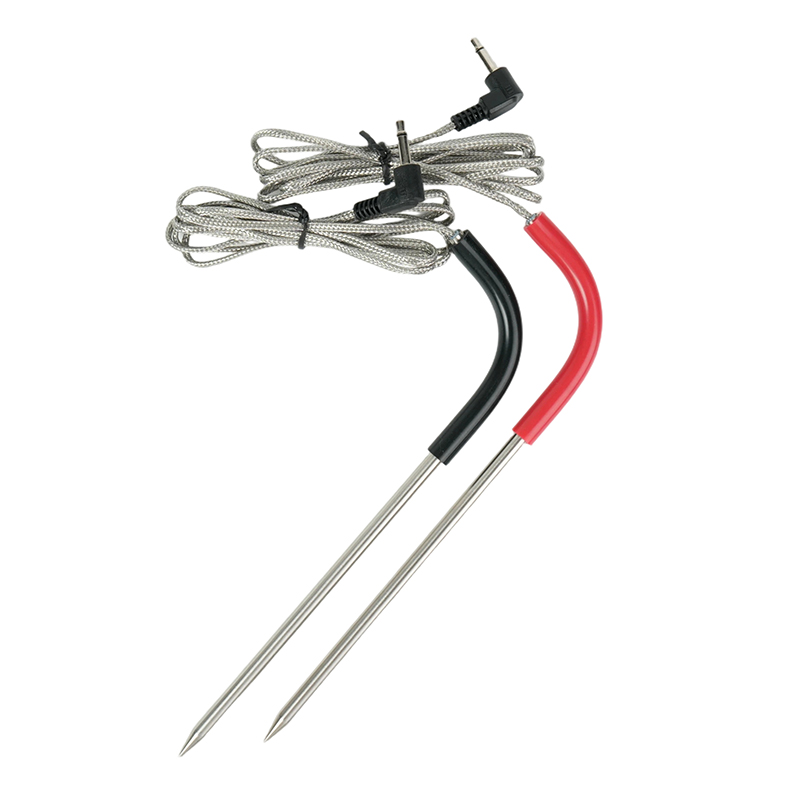
Why Are RTD sensors Used in Industry?
RTDs are commonly selected when temperature measurement requires good accuracy, stability, and repeatability. Platinum RTDs such as Pt100 and Pt1000 are widely used in industrial measurement systems.
The appropriate RTD construction depends on the required temperature range, installation method, response time, environmental conditions, wiring configuration, and accuracy requirements.
1. Industrial Process Control
RTD sensors are widely used for monitoring temperatures in industrial production processes.
They can measure the temperature of liquids, gases, tanks, pipes, processing equipment, and other process components. Stable temperature measurement helps control production conditions and maintain consistent process performance.
Typical applications include chemical processing, manufacturing equipment, heating systems, and industrial production lines.
2. HVAC Systems
Heating, ventilation, and air-conditioning systems require temperature sensors to monitor and control indoor air, supply air, return air, chilled water, hot water, and other thermal conditions.
RTDs can be used where stable and accurate temperature measurement is required for HVAC control and monitoring systems.
3. Pumps, Motors, and Industrial Machinery
Temperature can provide important information about the operating condition of industrial machinery.
RTDs may be installed to monitor bearings, motors, gearboxes, housings, and other machine components. An abnormal temperature increase can indicate friction, overload, insufficient lubrication, cooling problems, or other operating conditions.
For condition monitoring applications, temperature sensors are often combined with other measurements such as vibration and motor current.
4. Engines and Generators
RTD sensors can be used to monitor temperatures in engines, generators, and related equipment.
Depending on the equipment design, temperature measurement may be required for bearings, windings, cooling systems, lubrication systems, or other components.
Monitoring temperature can help operators identify abnormal thermal conditions and maintain equipment within its specified operating range.
5. Power Generation and Electrical Equipment
Electrical equipment can generate significant heat during operation. Temperature monitoring can therefore be an important part of equipment protection and condition monitoring.
RTDs may be used in generators, motors, transformers, switchgear, and other electrical equipment where stable temperature measurement is required.
6. Food and Beverage Processing
Temperature control is important in many food and beverage production processes.
RTD sensors can be used to monitor heating, cooling, storage, processing, and other temperature-controlled operations. Hygienic sensor construction and suitable probe materials can be selected according to the production environment.
7. Chemical and Pharmaceutical Processing
Chemical and pharmaceutical processes often require accurate temperature monitoring because temperature can affect reaction conditions, product quality, and process stability.
RTD probes can be configured with suitable protective sheaths and process connections according to the application. Material selection is particularly important when the sensor is exposed to corrosive chemicals or demanding process conditions.
8. Oil and Gas Equipment
Temperature monitoring is used across various oil and gas processes and equipment.
RTD sensors can be applied to pipelines, tanks, processing equipment, pumps, compressors, and other systems where temperature information is required for monitoring or control.
The sensor construction should be selected according to the pressure, temperature, vibration, chemical exposure, and installation requirements of the application.
9. Refrigeration and Cooling Systems
Temperature measurement is essential for refrigeration and cooling systems.
RTDs can be used to monitor temperatures in cooling circuits, process equipment, storage systems, heat exchangers, and other thermal management applications.
The required sensor type depends on the temperature range, response time, installation location, and environmental conditions.
10. Laboratory and Test Equipment
RTDs are also used in laboratory equipment and industrial testing systems where temperature accuracy and stability are important.
They can be incorporated into test chambers, environmental testing equipment, thermal systems, calibration equipment, and data acquisition systems.
11. Semiconductor and Electronics Manufacturing
Temperature control is important in electronics and semiconductor manufacturing because process temperatures can directly affect materials and production results.
RTD sensors can be integrated into process equipment and thermal management systems for monitoring surfaces, chambers, fluids, and other components.
12. Renewable Energy and Energy Storage
Temperature monitoring is also increasingly important in energy systems such as solar equipment, battery systems, energy storage systems, and power conversion equipment.
RTDs can provide temperature information for equipment monitoring, thermal management, and control systems where their accuracy and stability are suitable for the application.
What Types of RTD Sensors Are Used?
RTD sensors are available in different physical configurations to suit different applications.
Thin-Film RTDs: Compact and suitable for many general temperature measurement applications.
Wire-Wound RTDs: Designed for applications where specific accuracy or stability requirements need to be met.
RTD Probes: Enclosed in protective sheaths for industrial and process applications.
Surface RTDs: Designed for measuring the temperature of equipment surfaces.
Custom RTD Sensors: Configured with specific dimensions, cables, connectors, probes, or mounting structures.
How to Choose an RTD for Different Applications?
The correct RTD should be selected according to the actual measurement environment rather than simply choosing a standard sensor.
Important factors include:
Required temperature range
Required measurement accuracy
RTD resistance value
2-wire, 3-wire, or 4-wire configuration
Sensor response time
Probe size and insertion depth
Sheath material
Exposure to chemicals or moisture
Vibration and mechanical stress
Mounting method
Cable and connector requirements
Measurement and control equipment compatibility
Conclusion
RTD sensors are used in a wide range of applications where accurate and stable temperature measurement is required. Common applications include industrial process control, HVAC systems, machinery monitoring, generators, electrical equipment, food processing, chemical and pharmaceutical production, refrigeration, laboratory equipment, electronics manufacturing, and energy systems.
For OEM and industrial applications, the right RTD can be customized according to temperature range, sensor dimensions, accuracy, probe construction, cable, connector, installation method, and environmental requirements. Selecting the correct configuration helps ensure reliable temperature measurement throughout the operating life of the equipment.