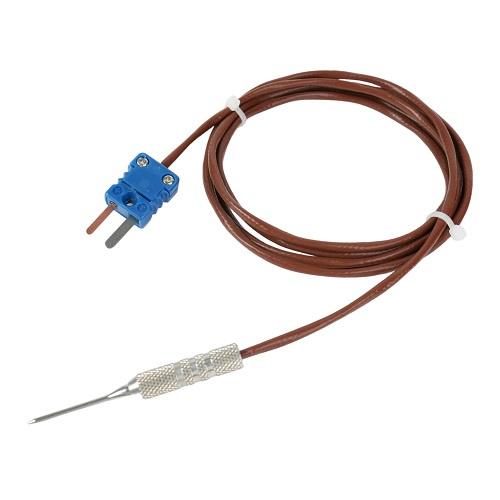
Choosing the right Type T thermocouple probe is important for achieving reliable and accurate temperature measurement. Although Type T thermocouples are commonly used in low-temperature applications, different working environments may require different probe materials, dimensions, junction designs, cable types, and connection methods.
Whether you are sourcing temperature sensors for food processing equipment, laboratory instruments, refrigeration systems, HVAC applications, or industrial machinery, understanding the key selection factors can help you choose a suitable Type T Thermocouple Probe for your equipment.
1. Confirm the Required Temperature Range
The first step is to identify the actual temperature range of your application. Type T thermocouples are generally suitable for low- and medium-temperature measurement, particularly where stable readings at lower temperatures are important.
However, the usable temperature range depends on the thermocouple wire, insulation, sheath, probe structure, and applicable standards. Before placing an order, confirm the following information:
Minimum operating temperature
Maximum operating temperature
Normal working temperature
Expected temperature fluctuations
Short-term temperature peaks
Selecting a probe with an appropriate operating range can help prevent premature damage and maintain measurement performance.
2. Choose the Right Probe Length and Diameter
The size of the probe directly affects installation compatibility, sensing position, mechanical strength, and response time. A probe that is too short may not reach the target measurement point, while an oversized probe may be difficult to install or may affect the equipment structure.
Probe Length
The required probe length depends on the depth of the measuring area and the installation position. For example, a longer probe may be required for tanks, pipes, test chambers, or deep containers.
Probe Diameter
A smaller-diameter probe may offer a faster response in certain applications, while a larger-diameter probe may provide greater mechanical strength and durability. The final choice should balance response time, installation space, and operating conditions.
3. Select a Suitable Sheath Material
The sheath protects the internal thermocouple wires from mechanical damage and environmental exposure. Different applications may require different sheath materials.
Stainless Steel: Commonly used for general industrial applications because of its mechanical strength and corrosion resistance.
Metal Alloy Sheaths: May be selected for applications involving specific temperature, chemical, or mechanical requirements.
Flexible Protective Structures: Suitable for certain installations where the probe needs to be routed through limited or difficult spaces.
When choosing the sheath material, consider exposure to moisture, chemicals, vibration, pressure, abrasion, and other environmental factors.
4. Consider the Junction Type
The sensing junction is the point where the two thermocouple conductors are connected. The junction design can affect electrical isolation, response time, and suitability for different measuring environments.
Grounded Junction
A grounded junction is connected to the protective sheath. It may provide a relatively fast response, but electrical noise or grounding-related issues should be considered when used with sensitive equipment.
Ungrounded Junction
An ungrounded junction is electrically isolated from the sheath. This design may be suitable for applications that require improved electrical isolation or reduced interference.
Exposed Junction
An exposed junction is directly exposed to the measuring environment. It may provide a fast response, but it requires careful consideration of mechanical protection and environmental compatibility.
The appropriate junction type depends on the measurement medium, response-time requirements, and electrical conditions of the equipment.
5. Evaluate the Required Response Time
Response time refers to how quickly the probe reacts to a change in temperature. If the temperature changes rapidly, a probe with a suitable fast-response design may be necessary.
Factors that influence response time include:
Probe diameter
Sheath thickness
Sensing junction design
Probe construction
Contact with the measured medium
Installation method
For applications such as laboratory testing or temperature control, it is important to balance response speed with the required mechanical strength and protection level.
6. Choose the Appropriate Cable and Insulation
The cable connects the thermocouple probe to the measuring instrument. The cable type should be selected according to the operating temperature, flexibility requirements, and installation environment.
When evaluating the cable, consider:
Cable length
Insulation material
Temperature resistance
Flexibility and bending requirements
Resistance to moisture, oil, and chemicals
Shielding requirements
Using a suitable thermocouple extension or compensating cable is also important for maintaining signal compatibility between the probe and the measuring instrument.
7. Check Connector and Installation Requirements
A Type T thermocouple probe must be compatible with the equipment used to read its signal. The connector, terminal, or mounting structure should be confirmed before production or purchase.
Common customization options include:
Miniature or standard thermocouple connectors
Wire terminals
Plug-and-socket connections
Threaded mounting structures
Flanges or fixing accessories
Bent or angled probe designs
Providing an installation drawing or equipment interface specification can help the manufacturer produce a probe that fits the application correctly.
8. Consider Measurement Accuracy and Calibration
Measurement accuracy is influenced by the thermocouple wire quality, probe construction, measuring instrument, installation conditions, and calibration method.
When selecting a Type T thermocouple probe, ask the supplier about:
Applicable thermocouple standards
Thermocouple wire grade
Available accuracy classes
Calibration options
Inspection and testing procedures
Measurement consistency between batches
For applications with strict temperature control requirements, a calibration report or additional inspection service may be necessary.
9. Consider the Application Environment
The working environment plays an important role in probe selection. A Type T thermocouple probe used in a clean laboratory may have different requirements from one installed in a food processing machine or refrigeration system.
Before selecting a probe, evaluate the following environmental conditions:
Humidity and water exposure
Contact with food or liquids
Chemical exposure
Vibration and mechanical shock
Available installation space
Electrical interference
Cleaning and maintenance requirements
These details can help determine the appropriate sheath, cable, junction, and protection design.
10. Work with a Reliable Type T Thermocouple Probe Manufacturer
For OEM and industrial projects, purchasing a standard probe may not always meet the requirements of the equipment. A professional Type T thermocouple probe manufacturer can provide customized solutions based on technical drawings, samples, or application specifications.
When evaluating a supplier, consider the following factors:
Experience in thermocouple and temperature sensor manufacturing
Ability to customize probe dimensions and structures
Material selection and production capabilities
Quality inspection and testing procedures
Stable production capacity
Technical communication and after-sales support
Providing detailed information about the application can help the manufacturer recommend a suitable sensor structure and reduce unnecessary development time.
Information to Provide When Ordering a Type T Thermocouple Probe
To improve communication with a supplier, buyers should prepare the following technical information whenever possible:
Thermocouple type: Type T
Required temperature range
Probe length and diameter
Sheath material
Junction type
Cable length and insulation
Connector or terminal type
Installation method
Required accuracy or calibration
Order quantity and customization requirements
Choosing the right Type T thermocouple probe requires more than simply confirming the thermocouple type. Temperature range, probe dimensions, sheath material, junction design, response time, cable construction, installation method, and measurement accuracy should all be considered.
For standard and customized applications, providing complete technical information to an experienced manufacturer can help ensure that the final Type T thermocouple probe meets the requirements of your equipment and operating environment.
Need a customized Type T thermocouple probe? Contact us with your application details, technical drawings, or product requirements to discuss a suitable temperature measurement solution.