



Choosing the right NTC temp sensor is important for achieving reliable and accurate temperature measurement. NTC Temperature Sensors are widely used in electronics, HVAC systems, home appliances, automotive equipment, battery management systems, industrial controls, and many other applications because they offer fast response, compact size, good sensitivity, and cost-effective temperature sensing.
However, not every NTC sensor is suitable for every application. Resistance value, B-value, temperature range, accuracy, response time, probe construction, installation method, and environmental conditions can all affect sensor performance.
This guide explains the key factors to consider when selecting an NTC temperature sensor and how to choose a sensor that matches your application's requirements.
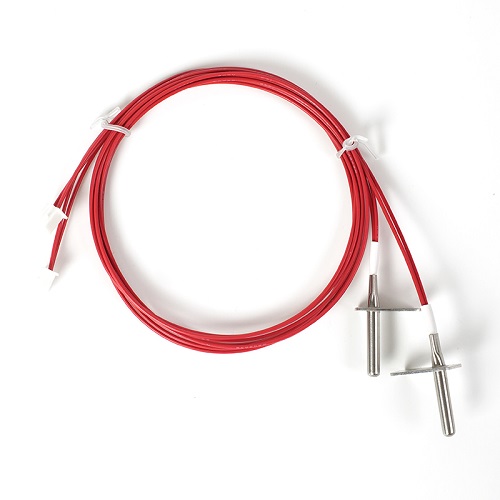
What Is an NTC Temp Sensor?
An NTC temp sensor uses an NTC thermistor as the temperature-sensitive element. NTC stands for Negative Temperature Coefficient, which means the electrical resistance of the thermistor decreases as temperature increases.
The sensor electronics measure the change in resistance and convert it into a corresponding temperature value. Because the resistance changes significantly over a relatively small temperature range, NTC thermistors can provide high sensitivity for temperature monitoring.
An NTC temperature sensor can be manufactured in different configurations, including bare thermistors, epoxy-coated sensors, glass-bead sensors, probe sensors, cable sensors, and customized assemblies.
Why Is NTC Sensor Selection Important?
The wrong sensor specification can result in inaccurate temperature readings, slow response, unstable measurements, or premature sensor failure.
For example, an NTC sensor designed for a household appliance may not be suitable for a high-temperature industrial environment. Similarly, a sensor with excellent accuracy at room temperature may not provide the required performance at very low or very high temperatures.
For this reason, selecting an NTC temp sensor should start with the actual operating conditions rather than simply choosing a sensor based on price or physical appearance.
1. Determine the Required Temperature Range
The first factor to consider is the temperature range that the sensor needs to measure.
Different NTC thermistors and sensor assemblies are designed for different temperature ranges. Before selecting a sensor, determine the minimum and maximum temperatures that the sensor will encounter during normal operation.
You should also consider whether the sensor may experience short-term temperature peaks beyond the normal operating range.
For example, an application may normally operate between 0°C and 80°C but occasionally experience temperatures above 100°C. In this situation, the sensor's maximum allowable operating temperature should be evaluated against both normal and peak conditions.
Choosing a sensor with an appropriate temperature range helps maintain measurement stability and extends service life.
2. Select the Correct Resistance Value
NTC thermistors are commonly identified by their nominal resistance at a specified reference temperature, often 25°C. This value is commonly expressed as R25.
Common nominal resistance values include 1 kΩ, 5 kΩ, 10 kΩ, 20 kΩ, 50 kΩ, and 100 kΩ, although many other resistance values are available.
The correct resistance value depends on the electronic circuit used to measure the sensor. For example, a control board designed for a 10 kΩ NTC sensor may not produce the desired temperature measurement when a different resistance specification is used.
Therefore, always confirm the required nominal resistance before selecting an NTC sensor.
3. Check the B-Value
The B-value, also called the beta value, describes the relationship between the resistance of an NTC thermistor and temperature over a specified range.
Two NTC thermistors can have the same nominal resistance at 25°C but different B-values. Their resistance curves can therefore differ at other temperatures.
This means that R25 alone is not enough to specify an NTC thermistor for many applications. The B-value and its reference temperature range should also be considered.
When replacing an existing sensor, it is important to match both the resistance value and the appropriate B-value to maintain the expected temperature-resistance relationship.
4. Consider Temperature Accuracy
Accuracy requirements vary significantly between applications.
A basic consumer appliance may tolerate a relatively broad temperature error, while laboratory equipment, medical equipment, battery management systems, or precision industrial controls may require much tighter measurement accuracy.
When evaluating an ntc temperature sensor, consider the thermistor tolerance, resistance tolerance, B-value tolerance, calibration requirements, and the accuracy of the electronic measurement circuit.
It is also important to evaluate accuracy across the entire operating temperature range rather than looking at performance at only one temperature point.
5. Evaluate Response Time
Response time describes how quickly the sensor reacts to a change in temperature.
A small NTC thermistor generally has a lower thermal mass and can respond quickly to temperature changes. Larger probes or sensors with thick protective housings may have slower thermal response.
If the application requires rapid temperature monitoring, such as motor protection, battery monitoring, heating control, or electronic equipment protection, response time should be considered during sensor selection.
However, a smaller sensor is not always the best choice. Mechanical strength, environmental protection, installation requirements, and long-term durability may also require a larger or more robust sensor structure.
6. Choose the Right Sensor Construction
NTC sensors can be manufactured in many different forms. The appropriate construction depends on where the sensor will be installed.
Common configurations include:
Epoxy-coated NTC sensors
Glass-bead NTC sensors
Metal probe NTC sensors
Stainless steel NTC probes
Plastic housing NTC sensors
Cable-type NTC temperature sensors
Surface-mount NTC sensors
Custom NTC sensor assemblies
For applications exposed to moisture, chemicals, vibration, or mechanical stress, the sensor housing and sealing method become particularly important.
7. Consider the Installation Method
The installation environment should be considered before selecting the physical design of the sensor.
For example, a surface temperature measurement application may require a flat or compact sensor structure, while a liquid temperature application may require a waterproof probe that can be inserted into the medium.
Common installation options include surface mounting, insertion mounting, threaded installation, clip mounting, adhesive mounting, and custom mechanical structures.
The cable length, connector type, probe diameter, mounting thread, and terminal configuration can also be customized according to the application.
8. Check Environmental Conditions
Temperature is not the only environmental factor that affects sensor selection.
Consider whether the NTC temp sensor will be exposed to:
Moisture or water
High humidity
Oil or chemicals
Dust
Vibration
Mechanical impact
Outdoor conditions
High temperature
Low temperature
Repeated thermal cycling
A sensor used inside a dry electronic device may require a very different construction from one installed inside an engine compartment, HVAC system, water heater, or industrial machine.
9. Check Electrical Compatibility
The NTC sensor must work correctly with the electronic circuit that reads its resistance.
Before ordering, confirm the sensor's nominal resistance, resistance tolerance, B-value, operating voltage conditions, measurement circuit, and expected temperature-resistance curve.
The sensor should also be compatible with the controller, microcontroller, temperature monitoring IC, or other electronic system used by the application.
For customized projects, it is helpful to provide the manufacturer with the circuit requirements or the specifications of the original sensor being replaced.
10. Consider Cable and Connector Requirements
For probe-type NTC sensors, the cable and connector can be just as important as the thermistor itself.
Cable materials should match the application's temperature range and environmental conditions. Cable length, insulation material, flexibility, connector type, terminal design, and waterproof requirements should all be considered.
For high-temperature applications, standard cable insulation may not be suitable. A manufacturer may recommend alternative cable materials based on the operating temperature and environment.
11. Think About Long-Term Stability
An NTC sensor may provide accurate readings when new but still needs to maintain stable performance throughout its service life.
Long-term stability can be affected by material quality, manufacturing processes, thermal cycling, moisture exposure, mechanical stress, and operating temperature.
For industrial or high-volume applications, buyers should pay attention to production consistency and quality-control procedures rather than evaluating only individual samples.
NTC Temp Sensor Selection Checklist
| Specification | What to Consider |
|---|---|
| Temperature range | Minimum, maximum, and peak operating temperature |
| Nominal resistance | R25 or resistance at the specified reference temperature |
| B-value | Resistance-temperature characteristics over the required range |
| Accuracy | Required measurement tolerance |
| Response time | How quickly the sensor needs to react |
| Housing | Epoxy, glass, metal, plastic, or customized construction |
| Cable | Length, insulation, flexibility, and temperature resistance |
| Connector | Connector type, terminals, and installation requirements |
| Environment | Water, humidity, chemicals, vibration, and thermal cycling |
NTC Temp Sensor vs. Other Temperature Sensors
NTC sensors are not the only option for temperature measurement. Depending on the application, engineers may also consider RTDs, thermocouples, semiconductor temperature sensors, and other technologies.
NTC sensors are often attractive when compact size, high sensitivity, fast response, and cost efficiency are important. RTDs may be preferred for applications requiring high accuracy and excellent long-term stability over a broad temperature range, while thermocouples are commonly selected for high-temperature applications.
The best technology depends on the actual requirements of the system rather than one sensor being universally better than another.
Applications of NTC Temperature Sensors
NTC temperature sensors are used across a wide range of industries.
HVAC Systems
NTC sensors can monitor air, refrigerant-related temperatures, heat exchanger temperatures, and other points in heating and cooling systems.
Home Appliances
Washing machines, refrigerators, air conditioners, water heaters, ovens, coffee machines, and other appliances can use NTC sensors for temperature monitoring and control.
Automotive Systems
Automotive applications may use NTC sensors for monitoring coolant, intake air, battery, cabin, or other temperatures depending on the system design.
Battery Management Systems
NTC temperature sensors can be integrated into battery packs and battery management systems to monitor cell or pack temperatures and support thermal management strategies.
Industrial Equipment
Industrial machines and control systems can use NTC sensors for temperature monitoring, overheating protection, and process control.
How to Choose an NTC Temperature Sensor Manufacturer?
For OEM and high-volume applications, choosing the right NTC temperature sensor manufacturer is as important as choosing the sensor specifications.
Look for a manufacturer that can provide stable product quality, consistent resistance characteristics, appropriate testing, customization capabilities, and technical support.
A reliable NTC temperature sensor supplier should also be able to discuss your operating conditions and recommend an appropriate sensor structure rather than simply offering a fixed catalog product.
For custom projects, ask about:
Custom resistance and B-value options
Custom probe dimensions
Custom cable length and insulation
Connector customization
Housing and sealing options
Sample development
Production capacity
Quality control procedures
Testing and inspection
OEM and ODM capabilities
Conclusion
Choosing the right NTC temp sensor starts with understanding the actual requirements of your application. Temperature range, nominal resistance, B-value, accuracy, response time, construction, installation method, environmental conditions, cables, and electrical compatibility all need to be considered.
For standard applications, a suitable catalog sensor may be enough. For demanding industrial, automotive, HVAC, battery, or appliance applications, a customized NTC temperature sensor can provide a better fit for the system.
By defining your technical requirements clearly and working with an experienced NTC temperature sensor manufacturer, you can select a sensor that provides reliable temperature measurement, stable performance, and the right balance between accuracy and cost.
Frequently Asked Questions
What is the most important specification when choosing an NTC temp sensor?
There is no single specification that is most important for every application. Temperature range, nominal resistance, B-value, accuracy, response time, and environmental conditions should be evaluated together.
What does NTC 10K mean?
NTC 10K commonly refers to an NTC thermistor with a nominal resistance of 10 kΩ at its specified reference temperature, typically 25°C. The exact resistance-temperature curve also depends on the thermistor's B-value.
Can NTC temperature sensors be customized?
Yes. Depending on the manufacturer, NTC sensors can often be customized in resistance value, B-value, probe size, housing, cable length, connector, sealing method, and other construction details.
How accurate is an NTC temperature sensor?
Accuracy depends on the thermistor tolerance, B-value tolerance, temperature range, calibration, circuit design, and sensor construction. The required accuracy should therefore be specified according to the actual application.
What is the difference between an NTC sensor and an RTD?
NTC sensors use a negative temperature coefficient thermistor whose resistance decreases as temperature increases. RTDs typically use a resistance element with a more predictable resistance-temperature relationship and are often selected for applications requiring high accuracy and stability.
