



An NTC temp probe is widely used for temperature sensing in appliances,food equipment,automotive systems,medical devices,and industrial controls.The exact range depends on the probe design,thermistor material,housing,wire insulation,and application environment.In general,ntc thermistors are used across a broad sensing range,with some product families covering roughly-80°C to+300°C,while many common probe assemblies operate in narrower ranges such as-40°C to+80°C,-40°C to+105°C,or-40°C to+155°C depending on construction.
A typical NTC temperature probe does not have one universal temperature limit.Instead,manufacturers specify an operating range for each model.For example,waterproof and flexible cable probes are often designed for moderate continuous sensing,while special glass or high-temperature thermistor designs can withstand much hotter environments.That is why choosing the right NTC Temperature Sensor probe is essential for both accuracy and service life.
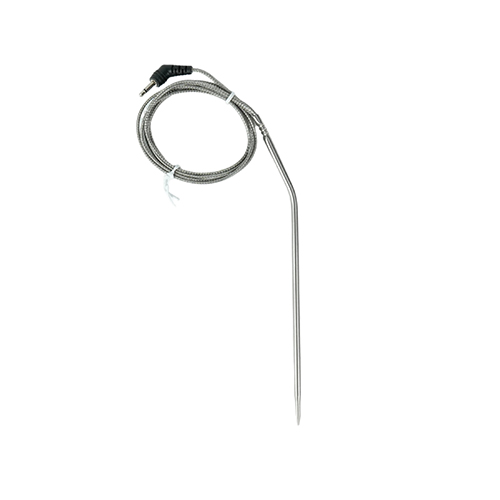
The working principle is simple:an NTC device decreases in resistance as temperature rises.This high sensitivity makes an NTC probe sensor an excellent choice for fast,accurate temperature feedback in control systems.However,the probe should always be used only within its specified operating range,because excessive heat,unsuitable materials,or harsh environmental conditions can reduce stability and reliability.
When selecting an NTC thermal probe,buyers should check more than temperature range alone.Probe sheath material,cable type,response time,moisture protection,and mounting method all affect performance.For low-to medium-temperature applications,standard epoxy or cable probes are often ideal.For more demanding environments,higher-temperature thermistor constructions may be required.
In short,the temperature range an NTC temp probe can measure depends on its design.Standard probes often cover everyday sensing needs,while specialized versions extend into much higher ranges.The best solution is to match the ntc temperature probe to the actual operating conditions of your product.
